Product Description of Drill Pipe
Drill pipe is a key part used in the energy project's drilling operations. It's a heavy-duty steel pipe that connects the drilling rig on the surface to the drill bit at the bottom of the well. The drill pipe is a fundamental component of a drill string in rotary drilling operations. It serves multiple critical functions: transmitting rotational torque from the drill rig to the drill bit, providing a conduit for the circulation of drilling fluid to cool the bit and carry cuttings to the surface, and withstanding significant tensile, compressive, and torsional stresses. Drill pipes are manufactured in standard lengths and connected by threaded tool joints, allowing for the extension of the drill string as the well deepens.
Key Features of Drill Pipe
| Feature | Description |
|---|
| Hollow Design | Allows drilling fluid (mud) to be pumped through, down the hole, and back up the annulus |
| High Strength | Supports its own weight for combined lengths exceeding 1 mile into the Earth's crust |
| Threaded Connections | Each end incorporates a tool joint (pin and box) for connecting sections |
| Durability | Resists abrasion, vibration, torsion, and internal/external pressure |
Types of Drill Pipe
Standard Drill Pipe – Long steel tubes that make up most of the drill string. They transmit torque and drilling fluid, and support the BHA.
Heavy Weight Drill Pipe (HWDP) – Thicker than standard pipe but lighter than drill collars. It acts as a transition piece to reduce fatigue failure and adds weight in directional/horizontal wells.
Drill Collars – Very thick, heavy, and rigid (almost solid steel). They provide weight on bit (WOB) to break rock, absorb vibration, and keep the hole straight.
Non-Magnetic Drill Pipe – Made of non-magnetic steel. It isolates MWD/LWD tools from magnetic interference, ensuring accurate surveys in directional drilling.
Upset of drill pipe:
The upset (thread-end finish) refers to the wall of the tool joint at the threaded connection. Drill pipe is offered with an internal upset (IU), an external upset (EU), or an internal-external upset (IEU).
IU - In an internal upset increased thickness along the inside walls compensate for the metal removed in threading with a uniform, straight outside wall.
EU - In an external upset the increased thickness along the outside diameter of the tubing compensates for the metal removed in threading with a straight bore.
IEU - In an internal-external upset thickness is increased along both the inside and outside walls of the pipe to compensate for the metal removed in threading.
Thread/Connection Types of Drill Pipe
NC26, NC31, NC38, NC40, NC46, NC50, 5-1/2 FH, 6-5/8 FH


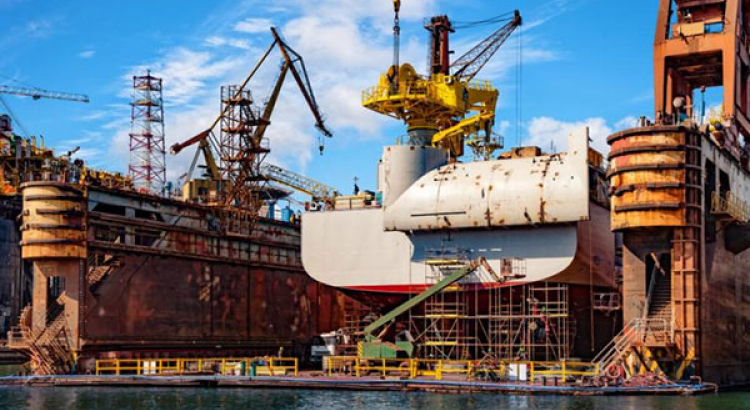 IntroductionProject introduction:has demonstrated its ability to conduct successful drilling operations in some of the most demanding environments on the planet.Why Choose UsThe other project in the oil sector is the long-planned construction of the petroleum products pipeline system through MexicoOil & Gas Industry
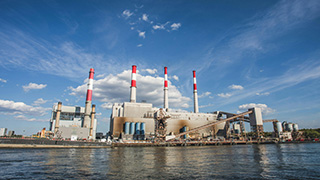 IntroductionPower industry projects demand steel pipes that deliver high strength, heat resistance, and long-term reliability under extreme operating conditions. Designed to withstand high temperature, high pressure, and corrosive environments, these pipes ensure safe and stable energy transmission.Power Industry
 IntroductionSteel pipes used in offshore and marine projects are engineered to withstand extreme conditions, including high pressure, saltwater corrosion, and harsh environments. From subsea pipelines to offshore platforms, these pipes deliver safe, efficient fluid transmission for critical operatioOffshore & Marine
